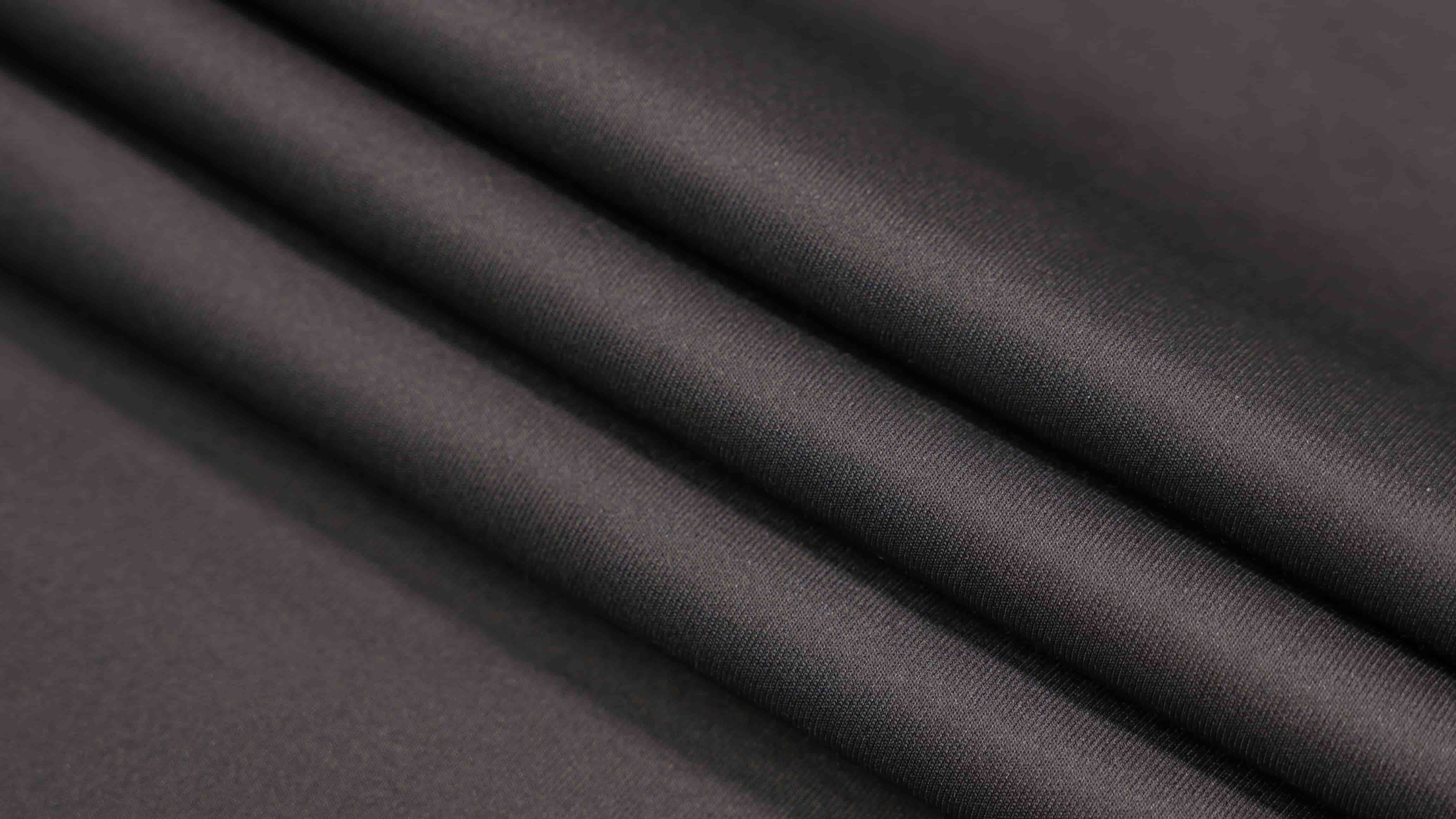
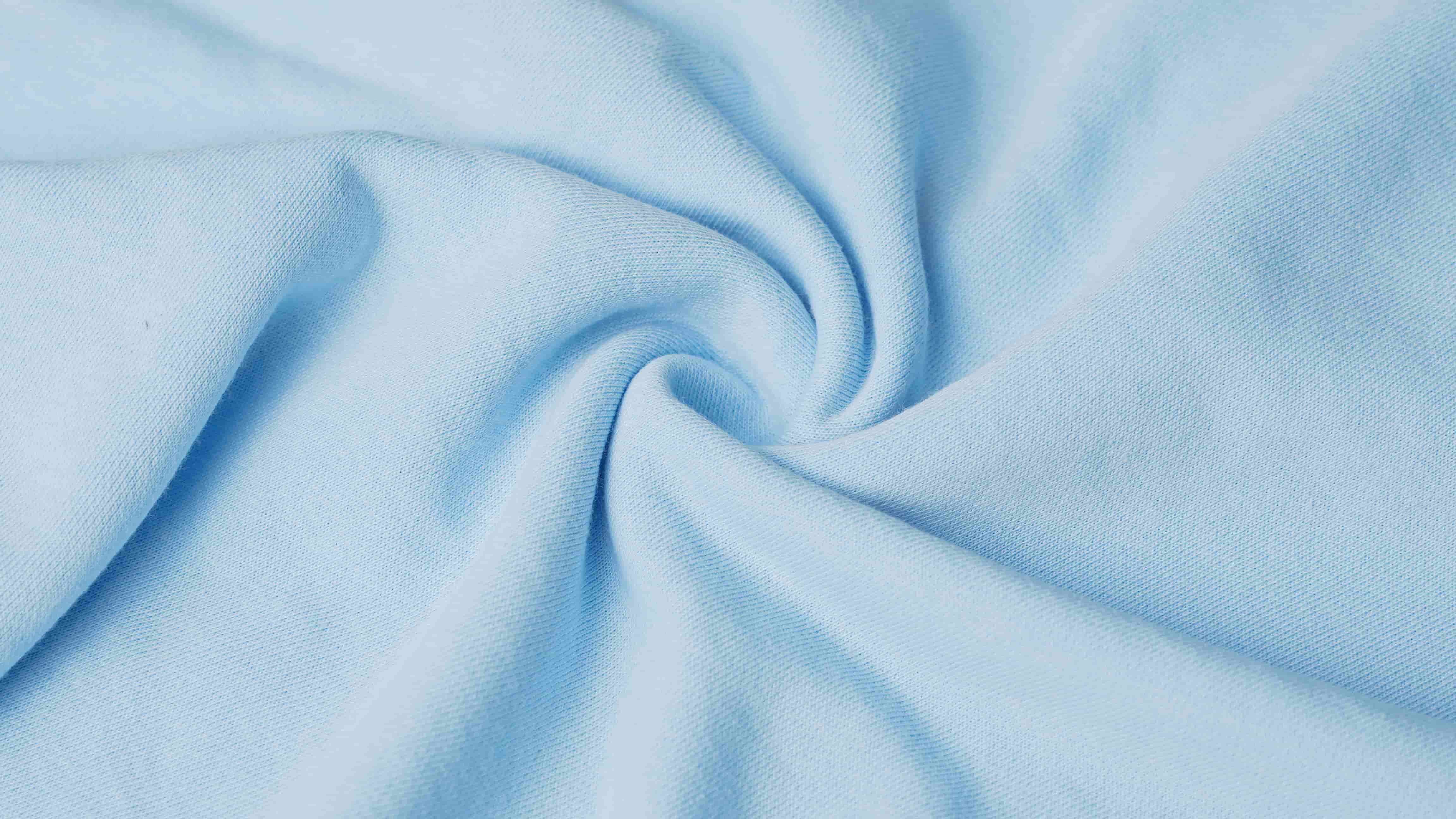
Choosing the right cold-weather fabric often means balancing warmth, softness, and breathability. Pure wool insulates well but can feel itchy or heavy. Pure cotton is soft and breathable, but may not provide enough warmth. Many synthetic fabrics trap heat, yet often feel less natural against the skin.
By combining cotton softness with wool’s natural warmth, it delivers comfortable insulation without overheating, a smoother hand feel, and better everyday wear performance. The knit structure also adds flexibility and comfort, making it suitable for sweaters, loungewear, scarves, and seasonal apparel.
For brands, designers, and fabric buyers, Cotton Wool Blend Knit Fabric offers a reliable balance of comfort, appearance, and durability for autumn and winter collections.
This guide explains the fiber benefits, blend ratios, knit structure, and practical uses that make Cotton Wool Blend Knit Fabric a preferred modern textile choice.
What Exactly Is Cotton Wool Blend Knit Fabric
Before exploring its performance advantages, it is essential to clarify the core definition and composition of Cotton Wool Blend Knit Fabric. As the name suggests, it is a knitted textile formed by blending natural cotton fiber and high-quality wool fiber through professional spinning, then woven with circular knit or jacquard knit technology. Unlike simple mixed fabrics with random fiber proportions, qualified Cotton Wool Blend Knit Fabric adopts standardized blending ratios formulated through textile testing, ensuring every batch maintains stable thickness, weight, softness, and thermal performance.
Soft Cotton Wool Blend Knit Fabric stands out in the textile industry because it abandons the shortcomings of single-fiber materials while retaining their core merits. Cotton contributes natural softness, moisture absorption, air permeability, and easy-care properties. Wool provides natural thermal insulation, elastic recovery, and plush surface texture. The knit weaving method further enhances the fabric’s flexibility, draping property, and comfort when worn against the skin.
What makes premium Cotton Wool Blend Knit Fabric different from inferior blended versions lies in raw material selection. High-grade versions use long-staple combed cotton paired with fine-count wool fiber, removing short impurities and coarse, hard fibers during the spinning process. This refined processing eliminates the rough, scratchy feeling found in low-cost blended fabrics, making the material perfectly suitable for close-fitting garments and high-end home textiles. For brands focusing on product comfort and reputation, selecting genuine high-quality Cotton Wool Blend Knit Fabric is the foundation of creating competitive winter wear and loungewear lines.
The Core Science: How Wool Delivers Natural, Sustainable Warmth
To understand why Cotton Wool Blend Knit Fabric achieves ideal thermal performance, we first need to analyze the natural physical structure of wool fiber, which is the key source of its warmth retention. Wool fiber has a unique natural crimp and hollow inner cavity structure that cannot be replicated by cotton or synthetic fibers. These tiny hollow spaces inside each wool fiber can lock in static air efficiently, and static air is one of the best natural thermal insulation media, blocking external cold air from penetrating and preventing body heat from escaping outward.
This passive temperature regulation mechanism allows wool to maintain a constant comfortable microclimate on the skin surface, even in low-temperature environments. Unlike chemical-coated fabrics that rely on artificial layers for warmth, wool’s insulation comes entirely from its inherent fiber structure, making it breathable while keeping warm instead of forming a stifling sealed layer. When integrated into Cotton Wool Blend Knit Fabric, wool’s thermal advantage is fully preserved, avoiding the thin and cold feeling of pure cotton fabric in winter.
Another valuable trait of wool is its natural moisture absorption and temperature adaptability. Wool can absorb up to 30% of its own weight in moisture without feeling damp, absorbing sweat vapor released by the body and releasing it slowly into the air. This prevents the cold, sticky feeling caused by sweat accumulation, a common issue with cheap synthetic thermal fabrics. This is precisely why Cotton Wool Blend Knit Fabric for winter wear remains comfortable not only in static cold environments but also during daily walking, commuting, and mild outdoor activities. It keeps you warm when stationary and avoids overheating and dampness when the body generates more heat.
Cotton Wool Blend Knit Fabric
Why Cotton Boosts Breathability and Skin-Friendly Comfort
If wool is the warmth core of Cotton Wool Blend Knit Fabric, cotton is the comfort and breathability cornerstone. Long-staple combed cotton used in premium blended fabric has a loose and porous fiber arrangement, forming countless tiny air channels inside the fabric. These channels allow fresh external air to circulate freely and discharge excess heat and moisture generated by the body, solving the biggest drawback of pure wool fabric—easy stuffiness in indoor heated environments.
Pure cotton is globally recognized for its hypoallergenic, skin-friendly characteristics. It contains no chemical irritating components, has a smooth and delicate surface, and will not rub or irritate sensitive skin. When blended with wool, cotton wraps the coarse wool fibers inside the knit structure, greatly reducing the itching sensation that many people experience when wearing pure wool clothing. This makes breathable Cotton Wool Blend Knit Fabric ideal for all groups, including children, pregnant women, and people with sensitive skin who cannot tolerate pure wool materials.
In addition to breathability and softness, cotton also improves the daily maintenance performance of Cotton Wool Blend Knit Fabric. Pure wool fabric is prone to shrinkage, deformation, and felting after machine washing, requiring strict dry cleaning. After blending with cotton, the fabric’s dimensional stability is significantly enhanced, allowing gentle machine washing without easy shrinkage or shape distortion. Cotton also enhances the fabric’s resistance to yellowing and aging, keeping the color fresh and the texture intact after long-term use and repeated cleaning. For apparel brands and home textile producers, this easy-care feature greatly reduces after-sales complaints and improves product durability and user satisfaction.
Optimal Fiber Blend Ratio: The Secret to Perfect Balance
The outstanding comprehensive performance of Cotton Wool Blend Knit Fabric is not only due to raw fiber quality but also relies heavily on scientific blending ratios. Textile research and long-term industrial production have verified that the classic optimal ratio is 80% long-staple cotton mixed with 20% fine wool fiber. This proportion is not arbitrarily set; it balances warmth, softness, breathability, durability, and cost performance to the greatest extent.
The 80% cotton proportion ensures the fabric retains cotton’s core advantages: superior breathability, cloud-like soft hand feel, skin safety, and easy washing care. It suppresses wool’s itchiness and shrinkage defects, making the fabric suitable for close-fitting wear all day long. The 20% wool proportion adds just enough thermal insulation, natural elasticity, and plush texture without making the fabric heavy, bulky, or stuffy. If the wool proportion is too high, the fabric becomes scratchy, expensive, and difficult to maintain; if the cotton proportion is too high, the thermal insulation drops significantly, losing the winter wear value.
Some manufacturers adjust the ratio to 75% cotton and 25% wool for colder regions, slightly enhancing warmth while still maintaining good air permeability. For transitional spring and autumn use, a ratio of 85% cotton and 15% wool keeps the fabric lightweight and breathable with slight warmth. Regardless of slight ratio adjustments, the core design logic remains the same: use cotton as the main body for comfort and breathability, and use wool as the auxiliary reinforcement for thermal performance and texture. This scientific proportion design is why premium Cotton Wool Blend Knit Fabric always outperforms random mixed low-grade fabrics on the market.
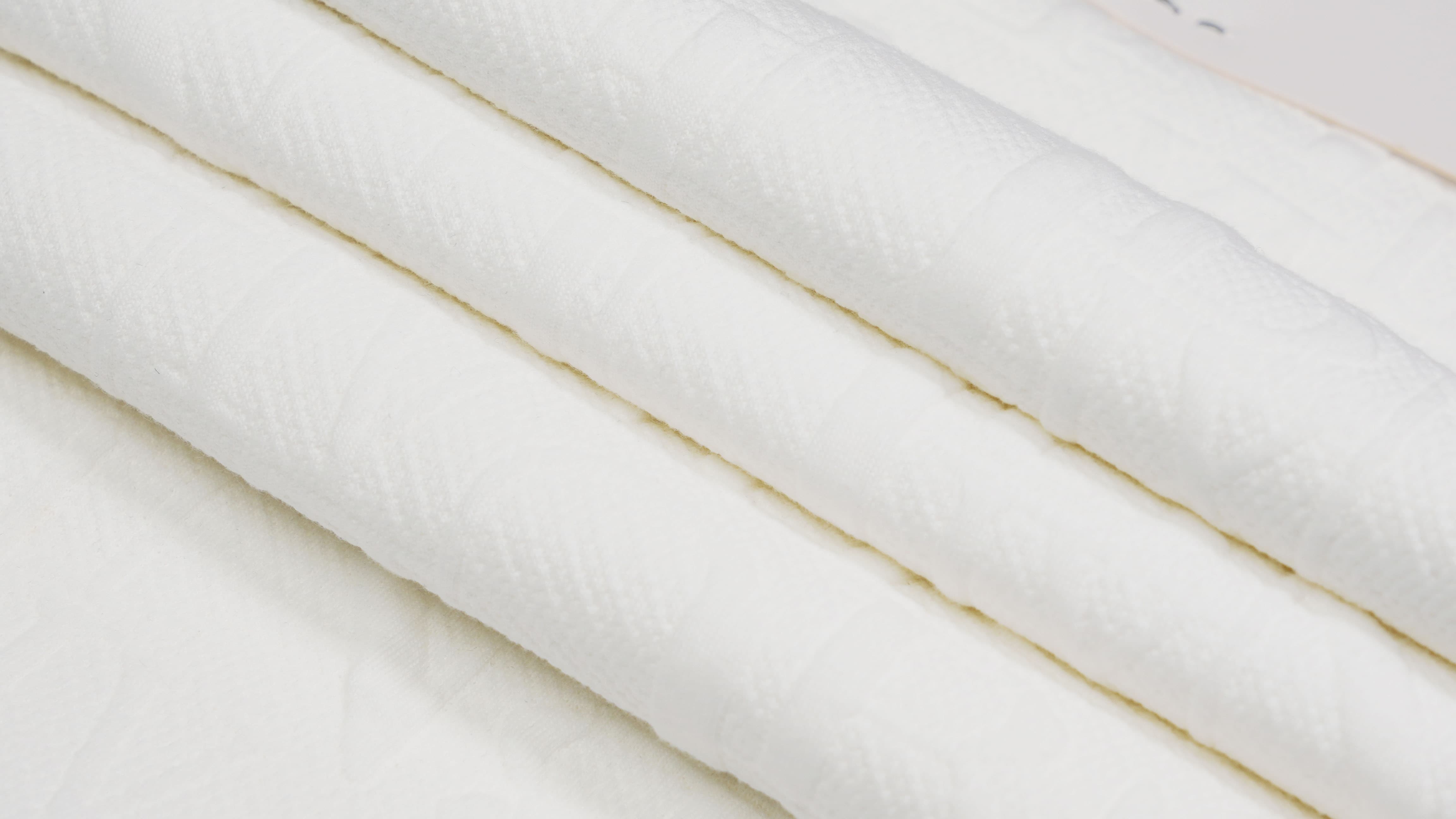
Referring to the official product material characteristics, premium Cotton Wool Blend Knit Fabric adopts advanced cloud jacquard knit technology, which is a key craft upgrade that distinguishes high-end products from ordinary plain knit blended fabrics. Traditional plain knit has a single flat surface, a simple structure, and an ordinary three-dimensional sense. Cloud jacquard weaving forms delicate cloud-shaped concave-convex textures on the fabric surface through computerized jacquard looms, bringing multiple layers of performance improvement.
First, the concave-convex jacquard structure forms more micro air layers inside the fabric, further enhancing warmth retention without increasing overall fabric weight. Second, the three-dimensional texture optimizes softness, creating a cloud-like, fluffy touch that is more delicate and comfortable than ordinary knit fabric. Third, jacquard craftsmanship improves the fabric’s structural stability, reducing stretching, loosening, and pilling during wearing and washing. Fourth, the elegant cloud pattern enhances visual texture and high-end sense, making the material not only practical in performance but also competitive in appearance design.
This craft advantage makes cloud jacquard style Cotton Wool Blend Knit Fabric particularly suitable for high-end sweaters, luxury loungewear, fashion cardigans, and premium home textile products such as blankets and cushion covers. It allows brands to create differentiated products with both a comfortable wearing experience and a unique aesthetic design, avoiding homogeneous competition with ordinary, plain fabrics.
Comprehensive Comparison: Cotton Wool Blend Knit Fabric Vs Pure Wool Vs Pure Cotton Vs Synthetic Knit
To intuitively reflect the advantages of Cotton Wool Blend Knit Fabric in balancing warmth and breathability, the following detailed comparison covers core performance dimensions, helping buyers and designers make accurate material selection decisions.
Feature
Cotton Wool Blend Knit Fabric
100% Pure Wool Fabric
100% Pure Cotton Knit Fabric
Synthetic Polyester Knit Fabric
Warmth Retention
Moderate to high, lightweight, and warm
Excellent warmth, heavy feel
Poor warmth, not suitable for a cold winter
Good warmth, easy to feel stuffy
Breathability
Natural balanced airflow, no overheating
Moderate breathability, easy stuffy indoors
Outstanding breathability, cool feeling
Poor ventilation, easy sweat, and static
Skin Softness & Comfort
Ultra soft, non-itchy, skin-friendly
Easy to scratch and irritate the skin
Very soft, perfect for sensitive skin
Plastic feel, poor skin affinity
Durability & Pilling Resistance
Good elasticity, anti-pilling, shape retention
Easy pilling, shrinkage, and deformation
Easy stretching, poor shape retention
Strong wear resistance, serious static
Daily Care
Machine washable, stable size
Only dry clean, easy shrinkage
Machine washable, easy to get out of shape
Easy washing, poor aging resistance
Application Scope
Sweaters, winter wear, loungewear, home textiles
High-end overcoats, formal winter apparel
Spring-autumn wear, close-fitting basics
Cheap casual wear, low-end thermal clothes
From the comparison table, it is clear that single-component fabrics all have obvious performance shortcomings, while Cotton Wool Blend Knit Fabric achieves a perfect balance in warmth, breathability, softness, durability, and maintenance. It has no obvious weaknesses in daily use scenarios, which is why it has become the preferred material for Cotton Wool Blend Knit Fabric for sweaters, loungewear, and winter wear in the mid-to-high-end textile market.
Application Scenarios: Wide Usage of Cotton Wool Blend Knit Fabric
The versatile, balanced performance of Cotton Wool Blend Knit Fabric allows it to cover multiple application fields, becoming a multi-functional raw material favored by apparel factories and home textile manufacturers.
Cotton Wool Blend Knit Fabric for Sweaters
This is one of the most mainstream uses. The fabric’s moderate thickness, soft hand feel, light warmth, and good draping property are perfectly tailored for all kinds of casual pullovers, crew neck sweaters, V-neck cardigans, and loose knitted tops. It avoids the bulkiness of pure wool sweaters and the coldness of pure cotton sweaters, suitable for daily commuting, office wear, and casual gatherings. The anti-pilling and shape-retention performance ensures sweaters do not deform or lose aesthetics after repeated wearing and washing.
Premium Cotton Wool Blend Knit Fabric for Luxury Loungewear
High-end home loungewear requires both warmth and skin comfort. Cloud jacquard Cotton Wool Blend Knit Fabric provides a fluffy cloud touch, natural temperature regulation, and elegant appearance, ideal for making family matching loungewear, bathrobes, and casual home suits. Its hypoallergenic feature is safe for adults, kids, and the elderly, greatly improving product grade and user experience.
Cotton Wool Blend Knit Fabric for Winter Wear
As a mid-layer winter material, it can be used for thermal base layers, knitted vests, hoodie inner layers, and transitional winter jackets. It locks in body heat without restricting movement, and its breathability prevents stuffiness when wearing multiple layers. It adapts to northern cold winters and southern humid cold weather, with strong regional adaptability.
Home Textile Decoration Use
Beyond apparel, this fabric is widely used in home textiles: knitted blankets, sofa cushion covers, bed throws, and decorative pillows. It adds warm texture to the home space, provides comfortable skin contact, and its durable and easy-care characteristics meet long-term household use needs.
Key Advantages of Cotton Wool Blend Knit Fabric
Dual Balance of Warmth & Breathability: Wool traps static air for constant warmth; cotton forms air channels to discharge excess heat, realizing automatic temperature adaptation.
Ultra Soft Skin-Friendly Experience: Long-staple cotton optimizes surface touch, eliminates wool itchiness, suitable for sensitive skin and all age groups.
Scientific Blend Ratio: Classic 80/20 proportion maximizes fiber advantages, avoiding the defects of single raw materials.
Durable & Anti-Pilling: Optimized knit structure improves elasticity and wear resistance, not easy to deformation, shrinkage, or pilling.
Easy Daily Maintenance: Compared with pure wool, it supports gentle machine washing, saving maintenance cost and time for end users.
Wide Application Flexibility: Covers sweaters, winter wear, loungewear, and home textiles, meeting diverse production sourcing demands.
FAQ
Q1: Is Cotton Wool Blend Knit Fabric warmer than pure cotton knit fabric?
Yes, blended wool fiber forms thermal air layers, delivering far better insulation while keeping good air circulation.
Q2: Will Cotton Wool Blend Knit Fabric cause skin itching?
No, high cotton ratio wraps coarse wool fibers, offering smooth, non-itchy contact for sensitive skin.
Q3: Can Cotton Wool Blend Knit Fabric be machine-washed?
Absolutely. It has better shrinkage resistance than pure wool, gentle machine wash is allowed with no easy deformation.
Q4: What makes this fabric perfect for sweater production?
It balances lightweight warmth, cloud softness, shape retention, and anti-pilling performance for long-term daily wear.
Q5: Does jacquard style affect the breathability of the fabric?
No, the jacquard structure forms micro air layers, improving warmth without damaging natural breathability.
Conclusion
Cotton Wool Blend Knit Fabric has won long-term market recognition precisely because it solves the inherent performance defects of pure cotton, pure wool, and synthetic fabrics. Through high-quality cotton and wool raw material selection, scientific blending ratio, and professional cloud jacquard knit craftsmanship, it perfectly balances natural warmth and comfortable breathability, while bringing ultra-soft hand feel, skin safety, durable structure, and easy daily care. Whether you are a clothing brand designer looking for premium winter raw materials, a fabric wholesaler preparing seasonal inventory, or a manufacturer producing sweaters, loungewear, and home textiles, this material can meet high-standard product demands.
Soft Cotton Wool Blend Knit Fabric, breathable Cotton Wool Blend Knit Fabric, and premium jacquard versions all maintain consistent, stable quality, suitable for mass customization and bulk ordering. If you want to source reliable Cotton Wool Blend Knit Fabric for sweaters and winter wear with balanced performance and competitive cost, explore our cloud jacquard cotton wool blend knit fabric collection. Choose natural blended textile quality, upgrade your product competitiveness, and deliver a comfortable, warm experience to every end consumer.