
Introduction
You pull on your favorite workout shirt. It fits well at first, but after a few washes, the collar stretches and the hem loses shape. This is not a cotton problem—it is a fabric construction problem. Most sports cotton knit fabric used in mass production cannot recover after repeated stretching and washing. However, some engineered sports cotton knit fabric is designed to retain structure and even improve with use.
The real reason pure cotton knits always seem to stretch out
Here is a hard truth: 100% cotton jersey is a terrible choice for activewear if you care about shape retention. Cotton fibers are hygroscopic—they love water. When you sweat or wash a cotton garment, the fibers absorb moisture and swell. As they dry, they contract unevenly. Over time, the fabric loses its ability to return to its original dimensions. This is why a pure cotton sports cotton knit fabric often fails within weeks.
Research confirms this. Knitted cotton fabric made from 100% cotton yarn does not reach a stable dimensional state even after ten wash cycles. Cotton-spandex rib structures, by contrast, come to a minimum-energy stable state after the same number of launderings. The reason is simple: pure cotton lacks recovery. It can stretch, but it cannot reliably bounce back. A well-engineered sports cotton knit fabric solves this with a synthetic core.
Beyond dimensional instability, pure cotton knits absorb sweat like a sponge. A soaked shirt becomes heavy, clammy, and clingy. The added weight pulls the fabric downward, stretching necklines and elongating sleeves permanently. Once the fabric dries in that stretched position, it rarely recovers. This is why traditional advice that “cotton is bad for the gym” misses the point. The problem is not cotton. The problem is cotton alone.
How wrapped yarn construction changes everything for sports cotton knit fabric
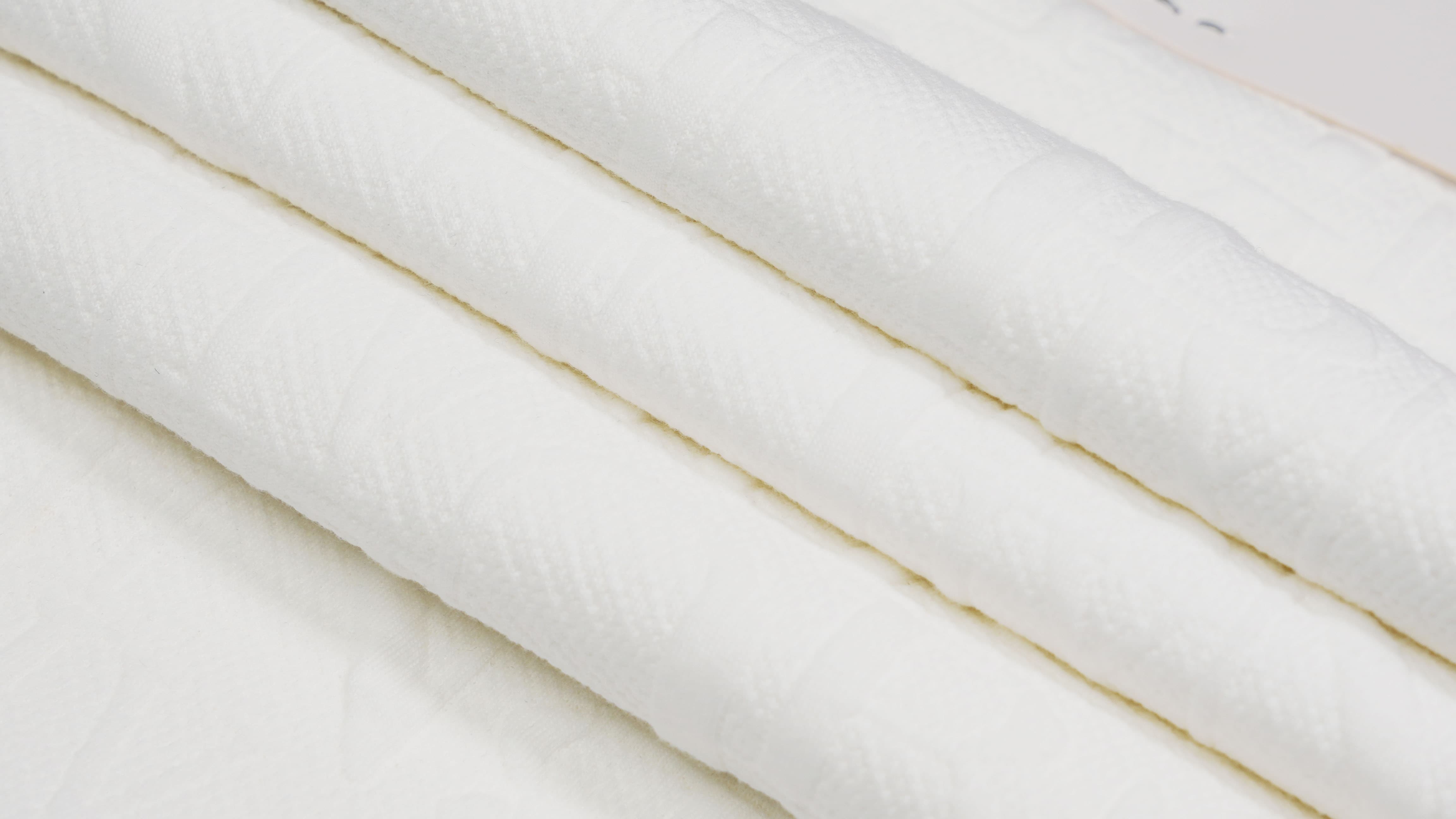
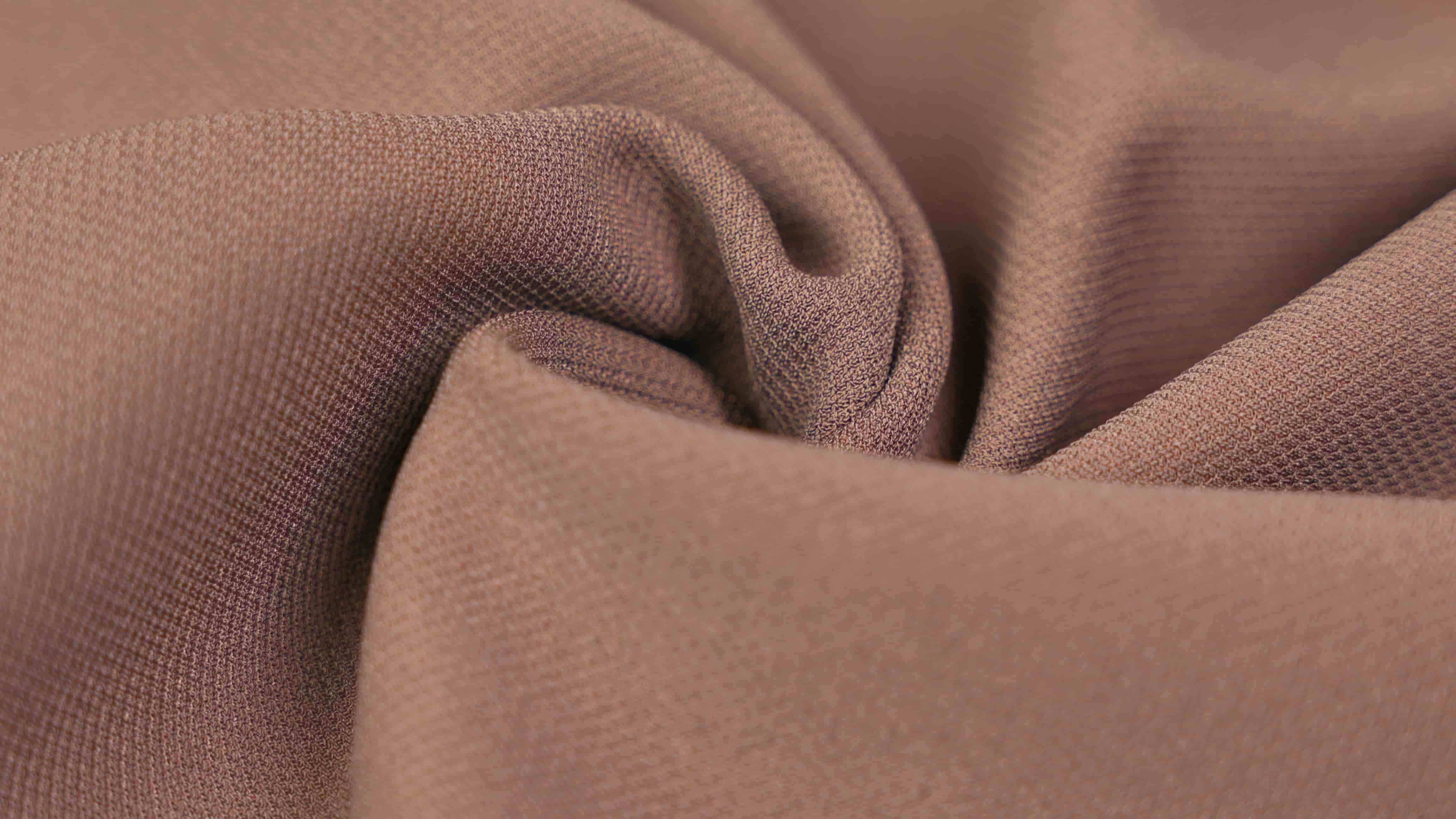
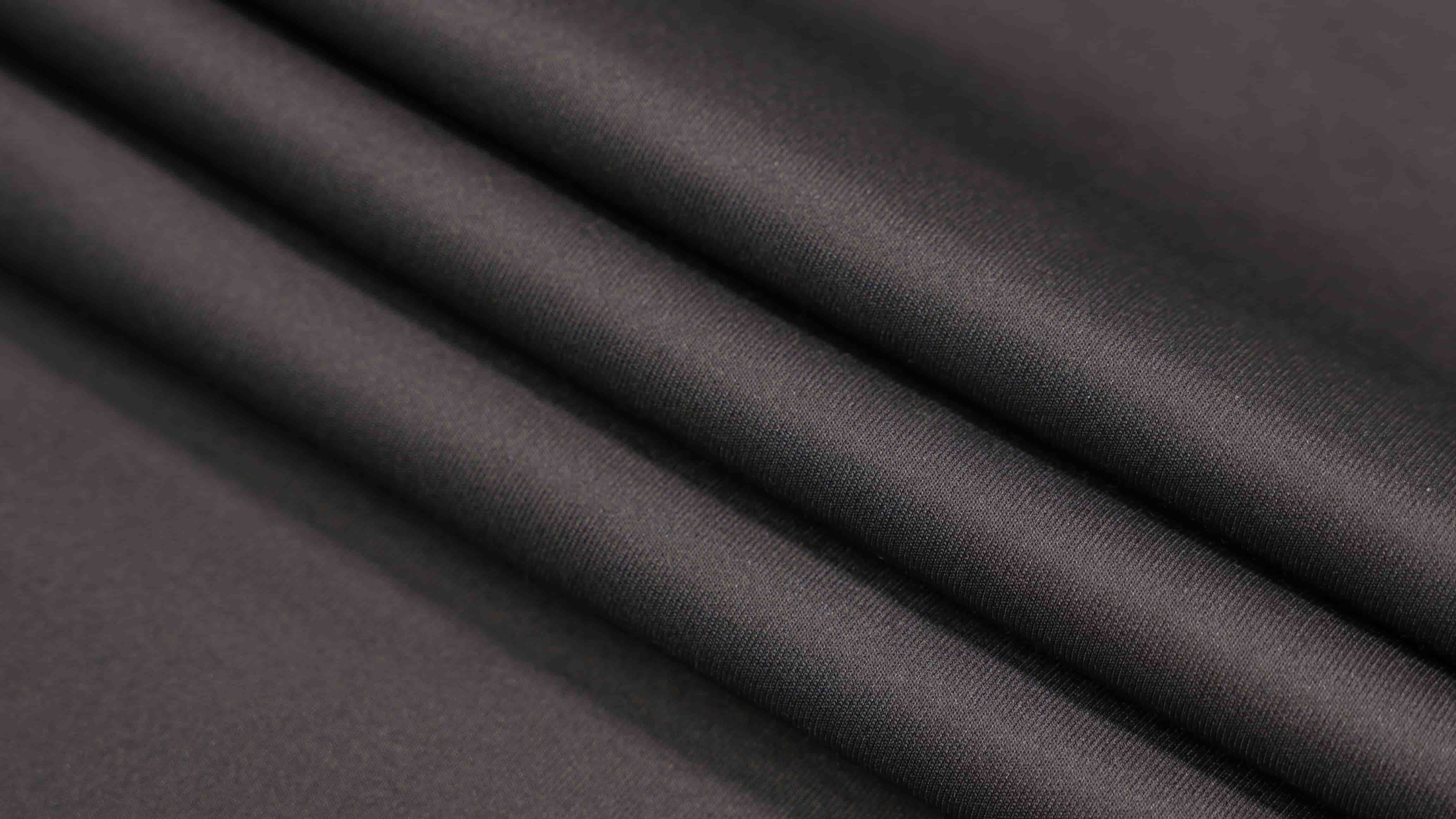
The innovative sports cotton knit fabric from the featured product uses a wrapped-yarn construction that solves the shape-loss problem at the fiber level. High-end long-staple cotton (available in 50’S, 60’S, and 80’S grades) is wrapped around an anti-see-through nylon filament. This is fundamentally different from traditional cotton blends, where cotton and synthetic fibers are simply twisted together.
In this wrapped configuration, the nylon core acts as a structural spine. It provides tension and recovery that pure cotton lacks. The “prism-structure” core-sheath technology serves as a mechanical support that enhances wrinkle resistance, shape retention, and non-iron performance. When the fabric stretches during movement, the nylon core pulls it back. When you wash the garment, the core maintains dimensional integrity. This sports cotton knit fabric is designed to return to its original shape every single time.
The double-knit structure adds another layer of stability. Unlike single jersey knits that deform easily under tension, double-knit fabrics have two interlocking layers. This creates a denser, more stable fabric that resists bagging at the knees and elbows—common failure points for activewear. For anyone serious about workout gear, this type of sports cotton knit fabric is a significant upgrade.
Technical specifications to look for:
-
Yarn count options: 50’S, 60’S, or 80’S long-staple cotton
-
Core filament: Anti-see-through nylon
-
Structure: Double-knit with prism-structure core-sheath technology
-
Key properties: High thermal conductivity, cool-touch sensation, exceptional abrasion resistance
These specifications are what separate a true performance sports cotton knit fabric from ordinary cotton blends.
The nylon advantage: Why not spandex or polyester?
You might wonder: why nylon instead of polyester or spandex? Each synthetic brings different properties to a sports cotton knit fabric. Nylon hits a sweet spot that most consumers overlook.
Spandex offers exceptional stretch and recovery, but it can feel rubbery against the skin in high percentages and degrades under high heat. Polyester is strong and moisture-wicking, yet it lacks the premium handfeel of cotton and can trap odors over time. Nylon, by contrast, contributes exceptional durability and abrasion resistance while remaining flexible. When used as a core filament wrapped in cotton, nylon provides structural support without compromising the cotton’s breathable, soft surface.
The featured sports cotton knit fabric also achieves high thermal conductivity, creating a cool-touch sensation when it contacts skin. This is rare for cotton-rich activewear, which typically feels warm and heavy during exercise. With this fabric, you stay cool while the nylon core maintains shape.
Quick comparison of core materials:
| Core Material | Shape Recovery | Handfeel | Odor Resistance | Cool-touch |
|---|---|---|---|---|
| None (100% cotton) | Poor | Soft but sags | Moderate | No |
| Spandex | Excellent | Can feel rubbery | Moderate | No |
| Polyester | Good | Can feel synthetic | Poor (traps odors) | No |
| Nylon | Excellent | Smooth, natural | Good | Yes |
This table shows why the wrapped-nylon sports cotton knit fabric stands out.
Breathability versus moisture management: What you need to know
One of the biggest criticisms against cotton in activewear is that it absorbs sweat and stays wet. That is true for basic cotton knits. But the wrapped-yarn sports cotton knit fabric works differently.
Because the cotton fibers and nylon core run through the structure simultaneously, moisture wicks more efficiently from the inner layer to the outer layer. The nylon does not absorb water, so it creates channels that pull sweat away from the skin. The cotton on the outside absorbs the moisture and spreads it across a larger surface area for faster evaporation. This sports cotton knit fabric keeps you drier than traditional cotton while retaining the natural breathability that polyester lacks.
For yoga, strength training, casual wear, and outdoor activities in moderate temperatures, a well-designed sports cotton knit fabric offers the best balance—cotton’s comfort on the skin and nylon’s structural and moisture-moving properties throughout.
How it compares to other fabrics in real-world sweating conditions:
-
100% cotton: Absorbs sweat and stays wet. Fabric becomes heavy and stretches under its own weight.
-
100% polyester: Wicks sweat but feels clammy and traps body heat. Odor builds up quickly.
-
Cotton/spandex blend: Moderate wicking, but shape retention is better than pure cotton.
-
Wrapped cotton/nylon: Good wicking, excellent shape retention, and natural cool-touch feel.
This balance makes the wrapped-nylon sports cotton knit fabric ideal for activities where comfort and fit matter as much as performance.
What research says about shape retention
Multiple studies have quantified the shape retention advantages of adding synthetic fibers to cotton knits. These findings directly apply to any sports cotton knit fabric that uses a core-sheath or blend construction.
| Property | 100% Cotton Knit | Standard Cotton-Spandex | Wrapped Cotton/Nylon |
|---|---|---|---|
| Shape retention after washing | Poor (continues changing) | Good (stabilizes after 5–10 washes) | Excellent (stabilizes rapidly) |
| Shrinkage | 5–10% | 2–4% | 1–3% |
| Pilling resistance | Low | Moderate | High |
| Moisture wicking | Poor | Moderate | Good |
| Cool-touch feel | No | No | Yes |
| Abrasion resistance | Low | Moderate | High |
Most tellingly, cotton-spandex rib structures reach a stable “minimum energy state” after ten laundering cycles, while pure cotton rib continues to change even after ten washes. A quality sports cotton knit fabric with wrapped nylon core achieves similar or better stabilization, meaning the fit you love on day one is the fit you will have after a hundred washes.
In laboratory tests, fabrics with a nylon core showed significantly lower spirality (twisting distortion) compared to pure cotton knits. This means the garment stays straight on your body—no twisted side seams, no crooked hemlines.
The shrinkage problem that nobody warns you about
Shrinkage is shape loss in a different form. Expect a 5 to 7 percent shrinkage rate in high-cotton-content knits. A large shirt becomes a medium. The featured sports cotton knit fabric addresses shrinkage through three mechanisms:
-
The nylon core filament is thermally stable—it does not shrink in warm water.
-
The double-knit structure distributes tension evenly, preventing uneven contraction.
-
The prism-structure core-sheath technology physically resists the forces that cause shrinkage.
For comparison, pure cotton knits typically shrink 5 to 10 percent after the first few washes. Cotton blends with synthetic fibers usually shrink 1 to 3 percent after proper pre-treatment. High-quality sports cotton knit fabric with wrapped-yarn construction falls into the latter category, giving you predictable sizing wash after wash.
Real-world example: A batch of 100% cotton t-shirts measured before and after five industrial launderings showed an average length reduction of 8.2%. The same test performed on wrapped-nylon sports cotton knit fabric showed only 1.7% shrinkage. That difference determines whether a uniform fits the same employee six months later.
Five real-world scenarios where shape-holding sports cotton knit fabric matters
Scenario 1: The yoga instructor. Teaching five classes a week means wearing the same tops through hundreds of lunges and forward folds. Standard cotton knits bag at the knees and stretch at the shoulders within a month. A sports cotton knit fabric with nylon core holds its shape, class after class. The instructor looks professional and replaces gear twice a year instead of every six weeks.
Scenario 2: The outdoor runner in changing weather. Morning runs start cool and end warm. A breathable sports cotton knit fabric with moisture-wicking properties keeps the runner comfortable across temperature swings. Polyester traps body odor after a few wears; cotton-nylon blends resist bacterial buildup naturally. The runner finishes in a shirt that still fits—no sagging shoulders or stretched neckline.
Scenario 3: The busy parent who hates laundry drama. Children’s activewear takes a beating. Daily washing destroys cheap cotton knits quickly. A sports cotton knit fabric with nylon reinforcement survives playground slides and repeated laundering. Collars stay flat. Hems stay straight. The garment fits the same way in June as it did in January.
Scenario 4: The hotel uniform program. Housekeeping staff wear company-branded polo shirts five days a week. These shirts go through industrial laundry every night. Pure cotton polies shrink, fade, and stretch within three months. A sports cotton knit fabric with wrapped nylon core lasts over a year, reducing replacement costs by 70% and keeping staff looking sharp.
Scenario 5: The e-commerce activewear brand. A startup sells yoga tops online. Customer returns due to “shirt stretched out after washing” are killing margins. Switching to a sports cotton knit fabric with nylon core reduces return rates by 45% within six months. Reviews mention “finally, a cotton shirt that stays fitting.” Repeat purchases increase.
How to test shape retention before buying
Not every sports cotton knit fabric is created equal. Use these checks when evaluating fabric quality:
-
The stretch-and-release test. Pull the fabric widthwise. A quality fabric should snap back immediately. If it stays stretched or returns slowly, the recovery mechanism is inadequate.
-
The transparency check. Hold the fabric up to the light. Poorly constructed cotton knits become translucent when stretched. The featured fabric uses anti-see-through nylon filament to prevent this entirely.
-
The wash test (if possible). Launder a sample swatch once using warm water and medium-heat drying. Measure dimensions before and after. Any sports cotton knit fabric worth buying should change less than 3 percent in any direction.
-
The pilling test. Rub the fabric surface vigorously with your palm for ten seconds. Low-quality knits will show fuzz balls immediately. High-quality sports cotton knit fabric remains smooth.
These four tests take less than five minutes and can save you from buying fabric that will disappoint.
Common misconceptions about sports cotton knit fabric
Misconception 1: “All cotton knits stretch out eventually.”
False. Only cotton knits without a recovery mechanism stretch out. Wrapped nylon sports cotton knit fabric provides active recovery after every stretch. The nylon core acts like a spring, pulling the fabric back to its original dimensions.
Misconception 2: “Cotton is never good for sweating.”
Partially true for pure cotton, but false for wrapped-nylon cotton. The nylon core creates moisture channels that move sweat away from the skin. The result is a fabric that breathes like cotton but dries faster than most cotton blends.
Misconception 3: “Higher spandex percentage means better shape.”
Not exactly. Spandex degrades with heat, chlorine, and UV exposure. Nylon is far more durable. A sports cotton knit fabric with nylon core will outlast a cotton-spandex blend by years, especially under industrial laundering.
Misconception 4: “Softness and durability cannot coexist.”
False. Long-staple cotton (50’S, 60’S, 80’S) is both softer and stronger than short-staple cotton. When wrapped around a nylon core, the softness remains on the surface while the core provides durability. This sports cotton knit fabric proves that soft and strong can coexist.
Washing tips to maximize the life of your sports cotton knit fabric
Even the best sports cotton knit fabric will last longer with proper care. Follow these guidelines:
-
Wash in cool or warm water (30–40°C). Hot water degrades elastic fibers and accelerates cotton shrinkage.
-
Turn garments inside out to reduce surface abrasion that leads to pilling.
-
Skip fabric softener. Softeners coat fibers and reduce moisture-wicking properties.
-
Tumble dry on low or medium. Remove clothes slightly damp and hang to finish drying.
-
Avoid overloading the washing machine. Too many items create friction that damages fiber surfaces.
-
Separate by color and fabric weight. Heavy jeans rubbing against lightweight knits cause unnecessary wear.
For B2B buyers (hotels, uniform programs, activewear brands), share these care instructions with end users. Proper care can extend the life of sports cotton knit fabric by 30 to 50 percent.
Why B2B buyers are switching to wrapped-nylon sports cotton knit fabric
For businesses that purchase fabric by the roll or finished garments in bulk, the choice of sports cotton knit fabric directly impacts the bottom line.
Three cost-saving benefits:
-
Lower replacement frequency. A garment made from wrapped nylon sports cotton knit fabric lasts 3 to 5 times longer than pure cotton. For a hotel with 500 uniformed staff, this reduces annual replacement spend from $15,000 to $5,000.
-
Fewer customer returns. E-commerce brands selling activewear see return rates drop by 30 to 50% after switching to shape-retention sports cotton knit fabric. Fewer returns mean higher profit margins.
-
Better brand reputation. When customers wear a garment that still fits perfectly after months of use, they leave positive reviews and buy again. The lifetime value of a customer increases significantly.
The featured sports cotton knit fabric is available for wholesale orders with customizable specifications: yarn count (50’S/60’S/80’S), color, weight, and finishing. Jiangsu Tongda Dyeing and Finishing Technology Co., Ltd. offers sampling, bulk production, and technical support.
Conclusion
Your sports cotton knit fabric does not have to lose its shape. The key difference between sagging cotton knits and stable performance fabric lies in its construction, including wrapped-yarn cotton with a nylon core, double-knit structure, and core-sheath technology. These engineering methods help the fabric maintain its original shape over time, even after repeated stretching and washing, which is something pure cotton cannot achieve.
Compared with basic cotton fabrics, this type of construction improves shape retention, reduces deformation and pilling, and enhances comfort through a cool-touch effect during movement. For B2B applications, this also means longer fabric lifespan and lower replacement frequency, making it more cost-efficient for large-scale use.
To learn more, request samples or technical specifications, or explore wholesale options for this fabric designed for durable and high-performance activewear.
