
The query ” Does fabric that is knitted have stretchiness?” may initially seem simple, but the response is derived from a combination of fabric structure, yarn type, and intended purpose. For those involved in textiles, apparel manufacturing, or procurement, understanding the why and how of fabric’s stretch is crucial: it affects the design, fit, function, and duration of products. In this article, we delve into the inner workings of knitted fabric, explore the causes of its elasticity, discuss the limitations, and highlight the best uses of fabric and textile products. This will help you in the choice of garments and products made of fabric or textile.
What is Knitted Fabric — Fundamental Structure
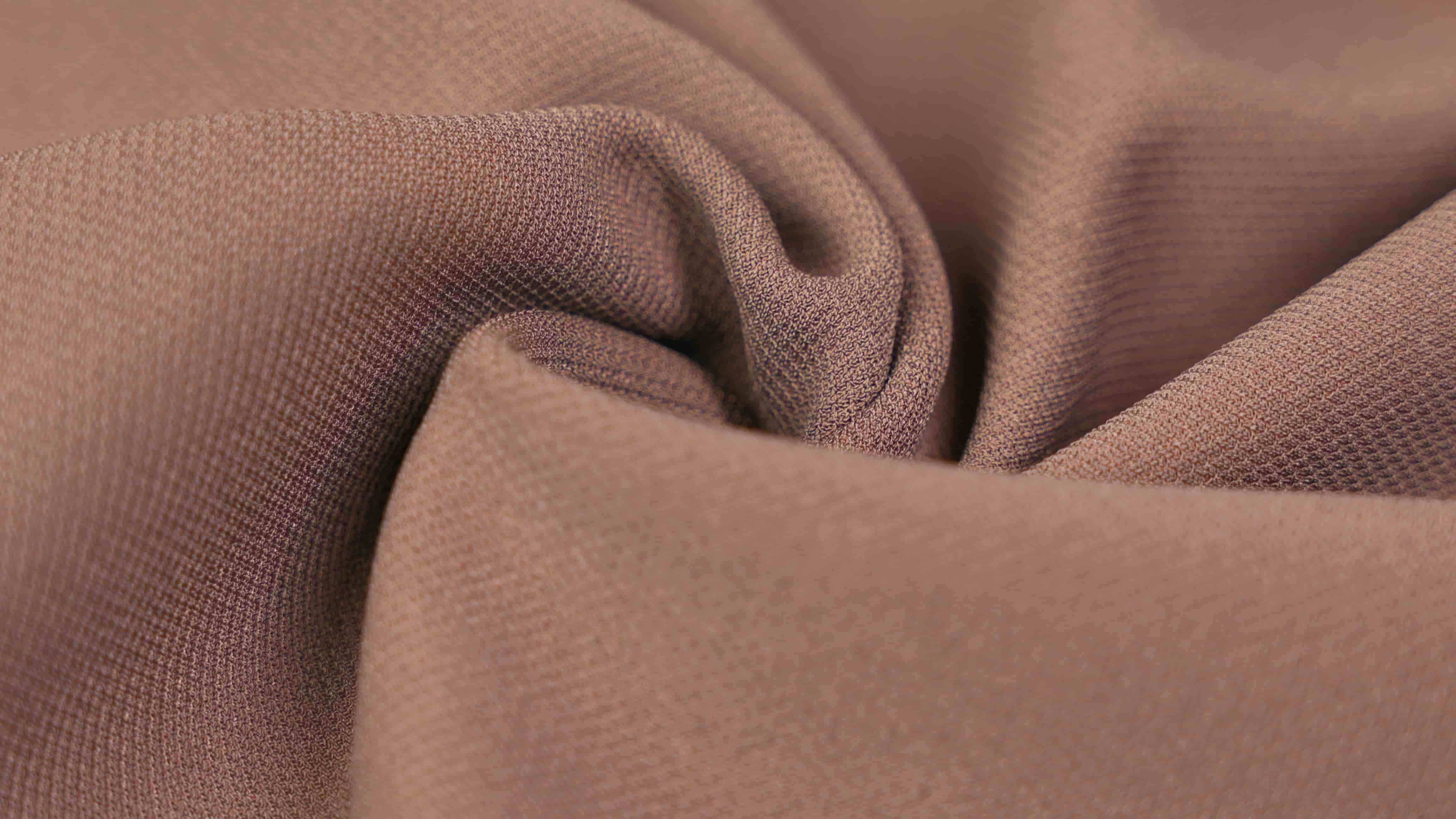
At its core, knitted fabric is defined by the method of construction: rather than weaving separate yarns at right angles, knitted fabric is created by inter-looping a continuous yarn (or multiple yarns) into a network of loops (courses and wales).
In a typical knit, a yarn forms a loop, then that loop becomes the base for the loop above it — creating a chain of interdependent loops.
This loop-based topology is fundamentally different from woven fabric, where yarns run straight and cross at fixed right angles (warp and weft).
Because the yarn path meanders (loops), knitted fabric doesn’t have rigid straight yarn lines, which gives it inherent flexibility.
There are two main categories: weft-knit and warp-knit fabrics.
Weft-knit: the common form for garments like T-shirts, sweaters, socks — loops are formed crosswise (horizontally).
Warp-knit: loops formed lengthwise (vertical yarns in zigzag), often more stable, used for lingerie, linings, and some technical fabrics.
This structural distinction already sets up why knitted fabrics are often stretchy: the loop architecture, by definition, allows deformation (stretch) that a woven grid cannot replicate.
Why Knitted Fabric Is Stretchy — The Mechanics of Elasticity
-
Loops of Geometry: The Essential Guide to Stretching and Recovering.
Because fabric that is knitted has loops that are perpendicular to the linear path of the fabric, the loops can be deformed. When pulled, the loops will expand or become open, which will allow the fabric to stretch.
This mechanism allows for stretch in multiple vectors – not just a single axis. This is why apparel that is knitted is often designed to accommodate body movement: bends, strides, twists — all without feeling constricted.
In fact, the type of yarn and the pattern of knitting affect the fabric’s stretchability to a maximum of 500%.
This elasticity was historically one of the primary causes of the development of knitting. This was caused by the production of clothing that required flexibility and mobility, such as socks, hosiery, and close-fitting clothing.
-
Variability: Not All Kits Have the Same Stretch.
However, “knitted” doesn’t necessarily mean “very stretchy”. The actual characteristics of stretch are dependent on the type of knit, the pattern of stitching, the composition of yarn, and the finish of fabric.
Several important differences:
Weft-knit textiles, which are common in T-shirts and sweaters, have a good crosswise stretch; however, the lengthwise stretch is typically less limited.
Amongst the wefts:
A simple jersey (single knit) has moderate stretch — enough for casual wear but limited recovery, especially lengthwise.
Rib knit (e.g., 1×1, 2×2) – because of the alternation of knit and purl stitches – it has a greater elasticity, especially in the width direction. This is why rib-bound is popular for collars, wrists, and waistlines (lines that need to stretch and regrow).
Warp-knit fabric is still susceptible to stretch, though it is typically more stable than weft-knit fabric. However, their propensity for stretch behavior is typically more stringent; they will stretch in a lengthwise direction over a crosswise direction.
As a result, when we buy or specialize in “knitted fabric”, we must understand the type of knit, as well as the pattern or stitch composition — this information is important because it determines the stretchiness, direction, and recovery of the fabric.
-
The composition and utilization of synthetic fibers in fabric production.
Another significant element: the type of fabric used. While natural fibers like cotton and wool produce basic stretch from the loop’s design, adding synthetic fibers like spandex, elastane, and Lycra increases the stretch and recovery of the fabric.
In high-end garments that participate in sports (activewear, sportswear, leggings, underwear), the majority of the fabric is composed of cotton or polyester, along with a small amount of elastane. The outcome: garments that not only stretch with motion, but also return to their original shape following use – this is crucial to the design, durability, and consumer satisfaction.
Conversely, a purely cotton fabric with no elastane may stretch, but over time it may lose its shape, sag, or become unbaggy. The composition of fibers and the way they are constructed is important in determining stretchiness and long-term viability.
How Stretch in Knitted Fabric Compares to Woven Fabric?
To understand the stretchiness of knitted fabric, it’s beneficial to contrast it with woven fabric, which is created by intersecting fabric yarns at 90 degrees (warp × weft).
Distinguished features:
Woven fabric’s fibers are arranged in straight lines; these lines cross perpendicular to each other – this configuration is solid and refuses to stretch. Except for elastic fibers being incorporated, woven cloth is typically subject to a bias (diagonal), and to a limited degree.
Conversely, knitted fabrics’ stretchiness is far greater than that of woven fabric; this is often attributed to loops.
Because of the greater stretchiness, knitted clothing typically has a more elastic fit that is adapted to movement, and it typically requires less seaming or punching (both of which are used in woven clothing to produce shape).
As a result, when creating garments that have to move, be comfortable, and have a body-conforming fit, like T-shirts, knitted fabric is typically the better option.
However, the trade-off is in the stability, shape retention, and durability of woven fabric: fabric is typically more stable, maintains its shape more under pressure, and is more effective in resisting abrasion and deformation.
Limitations and Challenges: Why Knitted Fabric Doesn’t Always Stay Perfect
While fabric that is knitted is typically stretchy, this is a significant advantage. However, there are also drawbacks. For those involved in industry, it’s crucial to recognize these when selecting fabric, designing garments, or evaluating quality.
-
Dimensional Instability and Recovery issues
Because fabric that is knitted relies on loops, it lacks the intrinsic structural stability of fabric that is woven. As such:
Over time, stress or weight may be repeated (e.g., the pull of the body, gravity on a heavy garment, or washing/ drying), and knits may deform, stretch out, or lose their shape.
Unless elastomeric fibers are employed, recovery (return to the original state) may be restricted. Some research has demonstrated that, under cyclic loading (e.g., repeated stretching), knitted fabric has a higher stretchiness than woven fabric, but it may have a hard time regaining full length.
As a result, applications that require shape retention and long-lasting performance, such as structured clothing, high-end items, or heavy outerwear, may not always be appropriate.
-
Variations by Knit Type and Design
Not all types of knitting are equally successful. For example:
Single-knit (jersey) may wrinkle at the margins, degrade, or become structurally unstable over time.
variants that are designed to be more steadfast, e.g., the double-knit variant (such as the double jersey), or heavier knits like Ponte, offer more stability in terms of dimensions, less curl, and better durability, but they have reduced stretch.
Even within the stretchy fabric, the direction of stretch has importance: many weft-knits have a greater crosswise than lengthwise stretch, which can have an effect on the way a garment is structured and behaves during wear.
As a result, it is not sufficient to simply label “knitted fabric” as being stretchy; one must take into consideration the specific pattern of knitting, the type of stitch, and the construction in order to have a predicted behavior.
-
Durability, Pilling, Sizing, and Abrasion
Because of its circular design and relative softness, knitted fabric, especially that which is lighter in weight, is more susceptible to pilling, sagging, and wear over time.
Woven fabrics, with their more confined yarns, typically have a better chance to resist this wear, maintain their shape, and endure repeated abuse or stress.
For manufacturers and brands, this implies that while knitted is beneficial for comfort and stretch, woven is still preferred when durability, structure, and longevity are paramount (e.g., uniforms, outerwear, heavy clothing, upholstery, industrial textiles).
Practical Implications: When to Use Knitted Fabric — Best Use Cases
Given the fabric’s strengths and limitations, it’s important to consider the intended use when purchasing. Here is a resource for textile professionals, designers, and developers.
Ideal Use Cases for Woven Fabric
Casual clothing and everyday wear: T-shirts, hoodies, lightweight sweaters – knit provides comfort, softness, breathability, and stretch.
Activewear, athleisure, sportswear, and underwear all require body-hugging design, flexibility, and movement, especially when elastomeric fibers are incorporated.
Fashionable apparel: Dresses, pants, shirts — the fabric’s elasticity allows the garments to conform to the body without the need for many seams or darts.
Items focused on comfort: Loungewear, sleepwear, and innerwear that are knitted have a softness, breathability, and stretch that make them ideal for clothing that is near the skin.
Textiles with a need for drape and flexibility: Some domestic textiles, such as stretchy bedding, malleable panels, and knitted fabric, can all be used to create a variety of shapes.
When Woven is more desirable
Structured clothing: Suits, tailored jackets, dress shirts, and pants that require a precise silhouetting and the retention of shape: both woven and stable dual-knits (e.g., ponte) are typically better.
Heavy-duty or high-wear articles: Workwear, upholstery, outerwear – where the importance of durability, abrasion resistance, and shape stability is greater than the stretchiness.
Clothes that require the least amount of stretch or do not deform, e.g., uniforms, formal wear, this type of clothing is avoidable and maintains the integrity of the garment over repeated uses and washes.
Durable home or industrial fabric: Cufflinks, upholstery, packs, and technical fabric that is often necessary for stability and strength.
How to Assess and Specify Stretchiness in Practice?
For those professionals who want to source or specify fabric that is knitted, here is a practical method and testing that assesses: stretchiness and the suitability of the fabric.
Describe the Different Kinds of Knitting and their respective patterns.
Figure out if the fabric is made from weft or warp.
Review the stitch type’s effectiveness: single jersey, rib, interlock, double-knit, ponte, etc. Stitch has a significant effect on the baseline stretchiness, stability, edge-curl, and drape.
Examine the composition of Yarn.
Examine the fiber composition: cotton, polyester, wool, blends, and the presence of elastomeric fibers (e.g., spandex/elastane). Elastane-based fabrics have a tendency to have increased stretch and better recovery.
For high-end garments that involve exercise (sportswear, activewear), a minimum percentage of elastic should be specified to ensure long-term durability and a maintained shape.
Do Stretch and Recovery tests
Pull the fabric’s fabric along both its width and length in order to assess its elasticity and to see how much it extends and rebounds.
For fabric production: consider standardized testing methods (e.g., tensile testing) that are especially important if the garments will be subject to repeated stress. Some technical articles have reported significant differences in elongation and breakage based on the knit structure.
Think about the End-Use and Conditions of Washing
Think about how the garment will be employed: daily wear, activewear, heavy use, frequent washing/ drying – then balance between stretch, recovery, stability, and durability.
Items that need to maintain their shape over time are best suited for stable laces or woven or blended laces that have a more structured composition.
Why “Is knitted fabric stretchy?” Doesn’t Have a Yes/No Answer: It’s about Specifications
To sum up: simply asking if fabric is stretchy is similar to asking if metal is heavy; the latter is based on the type of metal, its composition, style, and finish. Similarly, knitted fabric is pre-conditioned to stretch, but the actual behavior of stretch is dependent on:
fabric type (wefted or woven),
stitch type (jersey, rib, interlacing, double-bound, etc.),
composition of yarns (natural fibers, synthetic fibers, and elastomeric fibers),
the manufacturing and finishing processes.
As a result, from a fabric sourcing, manufacturing, or design perspective, it’s not sufficient to simply rely on the label “knitted fabric.” One must specifically discuss the characteristics of knitted fabric, the stretchiness of its fibers, and the requirements of performance associated with the intended use of the fabric.
Conclusion — When Knit Works Best (and When to Think Twice)
Yes — typically, knitted fabric is very stretchy. The loop-based design, combined with the appropriate yarns, offers elasticity, flexibility, and comfort that is not typical of woven fabric. This is why knit is the most popular fabric for casualwear, athleticwear, underwear, and clothing that is designed to move and conform to the body.
However, stretchiness is accompanied by a trade-off: the potential loss of shape over time, less structural support, risk of sagging, pilling, or deformation, especially in the presence of stress or frequent washing/wear. For situations that require long-term durability, structure, precise agreement, or resistance to wear and tear, woven fabric or consistent stitching (e.g., double-knit, ponte) is often the safest choice.
For fabric consumers, apparel designers, sourcing agents, and manufacturers, the takeaway is simple: don’t consider “knitted fabric” as a singular characteristic, but rather as a way to define a specific product. Describe the different types of knits, stitches, and compositions of yarn, perform stretch and recovery tests, and match fabric properties to the function of garments.
Only by following this method can you capitalize on the benefits of knit — warmth, stretch, and fit — while avoiding the weaknesses of instability, durability, and shape loss, to produce quality products that satisfy both performance and consumer desires.
