
Introduzione
Think about the clothes closest to your skin—underwear, T-shirts, pajamas, or leggings. Daily movement and sweat create a warm, humid environment where bacteria can grow quickly, leading to odor, discomfort, and skin irritation. This is why more consumers are turning to antibacterial knit fabric for everyday wear.
However, not all antibacterial knit fabrics perform the same. Some lose effectiveness after washing, while others compromise softness. The real difference comes down to fiber quality, knitting structure, and finishing technology. This article explains what truly makes a premium antibacterial knit fabric stand out.
Market Demand for Antibacterial Knit Fabric in the Global Textile Industry
The global antimicrobial textile market was valued at approximately $12.4 billion in 2025 and is projected to reach $19.9 billion by 2034, growing at a CAGR of 5.30%. More specifically, the antibacterial knitted textile segment is expected to grow from $2.64 billion in 2025 to $5 billion by 2035.
This steady growth is driven by rising consumer awareness of hygiene, accelerated by the pandemic, which has increased demand for textiles that help reduce microbial contamination. Today’s consumers expect more than just comfort and style—they also want functional benefits that support health and cleanliness.
The trend is evident across multiple categories, including children’s wear, women’s apparel, sportswear, and home textiles. As a result, tessuto a maglia antibatterico is shifting from a niche material to a mainstream requirement, creating both challenges and opportunities for brands and manufacturers.
What Makes High-Quality Antibacterial Knit Fabric Different?
The difference between a premium tessuto a maglia antibatterico and a standard one starts long before antibacterial finishing. It is defined by fiber selection, spinning technology, and yarn quality.
Premium Long-Staple Cotton Base
This fabric uses high-quality long-staple cotton, known for its longer fiber length compared to regular cotton. These longer fibers can be spun into smoother, stronger yarns, resulting in a softer hand feel and improved durability.
It also helps reduce pilling and ensures long-lasting comfort. From the first wear, the tessuto a maglia antibatterico made with long-staple cotton feels noticeably smoother and more skin-friendly.
Compact Siro-Spun Yarn Technology
The fabric also uses compact Siro-spinning technology to create a more uniform yarn structure with reduced surface hairiness. This improves softness and reduces friction against the skin.
At the same time, it provides a stable base for antibacterial finishing, allowing functional agents to distribute more evenly and perform consistently. In practical terms, better yarn quality leads to better long-term fabric performance.
Multiple Yarn Counts for Different Applications
Yarn counts range from 50’S to 100’S, offering flexibility for different product applications. Higher counts such as 80’S and 100’S are suitable for lightweight, premium garments, while 50’S and 60’S are better for everyday apparel like T-shirts and loungewear.
This range allows manufacturers to select the right balance of softness, weight, and durability while maintaining a consistent tessuto a maglia antibatterico standard across product lines.
Structural Design That Enhances Performance
Fiber and yarn quality set the stage, but the knitting structure determines how the fabric behaves in real life. This fabric is built on a double‑bed knitting system, which creates loops on both the front and back surfaces—a design that offers distinct advantages.
-
Double-Bed Knitting for Stability and Thickness
Unlike single‑knit constructions that can stretch out and lose their shape, double‑bed knitting produces a fabric that is thicker, more stable, and more substantial. This extra thickness translates to better coverage and a more premium hand feel. It also improves the fabric’s recovery—meaning it snaps back after stretching, so garments keep their fit wash after wash. For items like children’s clothing and activewear, which undergo repeated stretching and laundering, this structural integrity is invaluable.
-
1×1, 2×2, and 4×4 Rib Structures Explained
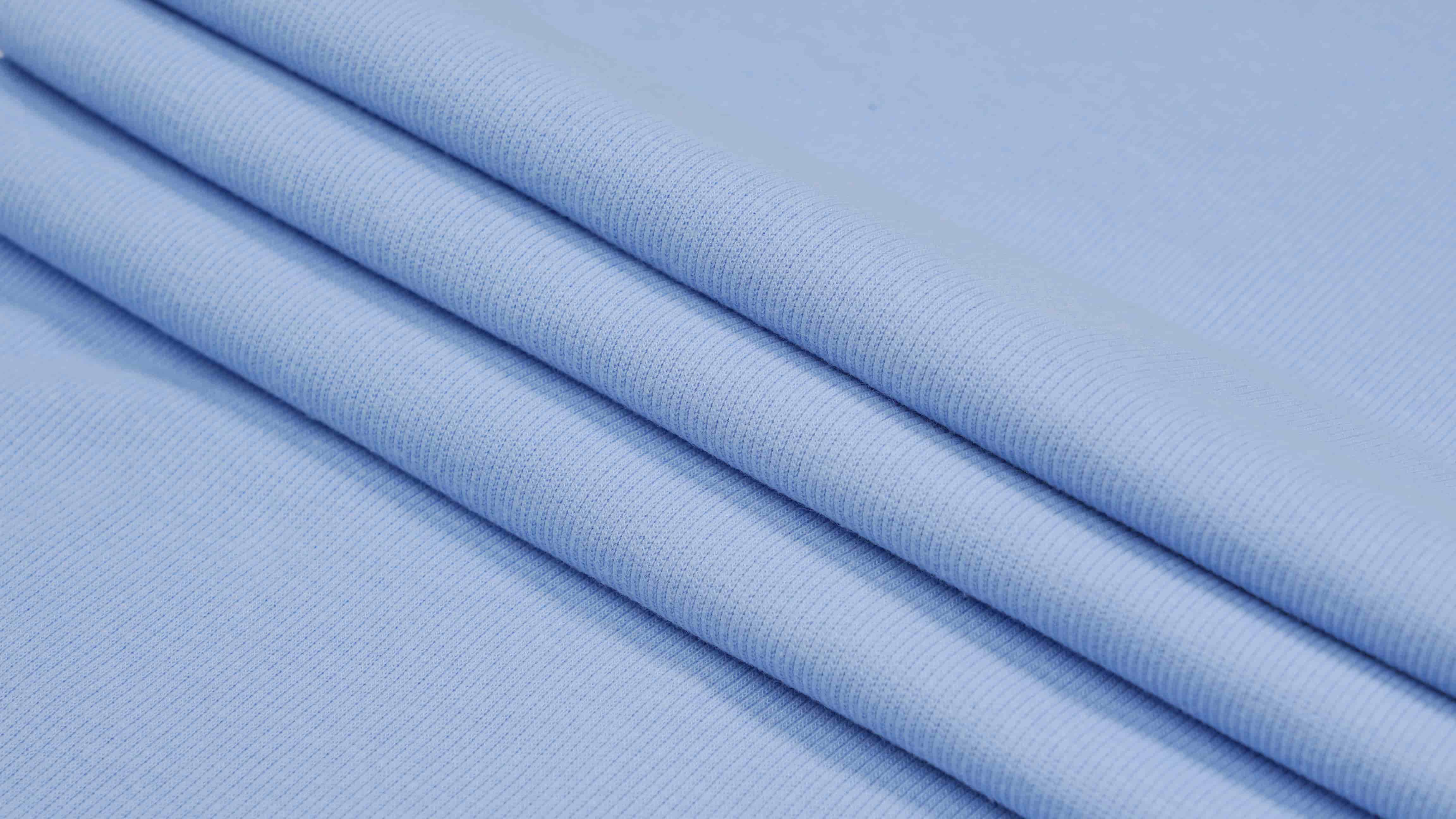
Within the double‑bed framework, the fabric can be knitted in various rib structures—1×1, 2×2, and 4×4. These numbers refer to the alternating pattern of knit and purl stitches. The 1×1 rib is the most common, offering balanced stretch and recovery, which makes it perfect for close‑fitting garments like children’s tops and women’s outerwear. The 2×2 and 4×4 ribs provide more pronounced texture and elasticity, making them ideal for collars, cuffs, and hems—areas that require extra grip and shape retention.
-
Flexible Applications Across Different Garment Parts
This versatility means that a single type of tessuto a maglia antibatterico can serve multiple roles within a single garment. You can use the 1×1 rib for the main body, 2×2 for the neckband, and 4×4 for the sleeve cuffs—all with consistent antibacterial protection. For manufacturers, this simplifies sourcing and inventory, reducing the need to stock multiple fabric types.
How Antibacterial Finishing Technology Works
Now we get to the core of the matter: the antibacterial function itself. This fabric adopts internationally advanced finishing technology, but how does it actually work?
-
Mechanism of Antibacterial Protection
Antibacterial finishes typically work by disrupting bacterial cell walls or interfering with their metabolic processes. When bacteria land on the treated fabric, the active agents prevent them from multiplying. Some agents release ions that bind to bacterial enzymes, deactivating them. Others physically rupture the cell membrane. The result is a significant reduction in bacterial populations—often up to 99.9%—which directly translates to less odor, lower risk of skin infections, and prolonged freshness.
-
Common Technologies (Silver Ion / Chitosan Treatments)
Two of the most widely used technologies are silver‑ion treatments and chitosan finishes. Silver ions are known for their broad‑spectrum antibacterial activity and durability. Chitosan, derived from natural sources like shellfish, offers a bio‑based alternative with excellent skin compatibility. This fabric employs a proven technology that is both effective and safe for close‑to‑skin wear. Studies have shown that cotton knits treated with chitosan can achieve 99.9% antibacterial efficacy, while silver‑modified fabrics maintain their activity even after multiple washes.
-
Wash Durability and Long-Term Effectiveness
A common concern with antibacterial fabrics is whether the protection washes away. Premium finishing technologies are designed to bond with the fiber surface, not just coat it. Research demonstrates that well‑applied antibacterial treatments can retain significant efficacy after 5–10 laundering cycles. For example, one 2026 study found that silver‑based finishes on cotton retained antimicrobial activity after five washes, with only minimal reduction. This means your tessuto a maglia antibatterico garment will continue to protect and deodorize for months of regular use, not just the first few wears.
Functional Benefits of Antibacterial Knit Fabric
Beyond the science, what does this mean for the person wearing the garment? Here are the three most tangible benefits.
-
Odor Control for Everyday Wear
Bacteria are the primary cause of body odor—they break down sweat and skin cells into malodorous compounds. By dramatically reducing bacterial growth, tessuto a maglia antibatterico naturally suppresses odor formation. This is a game‑changer for active individuals, commuters, and anyone who wants to feel fresh throughout the day. Parents will also appreciate that children’s clothes stay cleaner between washes, reducing the frequency of laundry and extending garment life.
-
Skin-Friendly Comfort Performance
Sensitive skin often reacts to bacterial overgrowth with redness, itching, or rashes. Antibacterial fabrics help prevent these issues by maintaining a cleaner microenvironment against the skin. Combined with the softness of long‑staple cotton and the smoothness of compact‑spun yarns, this fabric offers a hypoallergenic comfort that is particularly valuable for babies, children, and people with dermatological conditions.
-
Moisture Management and Breathability
Double‑bed knitting, despite its thickness, still allows for excellent air circulation because the rib structures create natural channels for moisture vapor to escape. This helps regulate body temperature and wicks perspiration away from the skin, keeping you dry and comfortable even during physical activity. The breathability, combined with antibacterial action, makes this fabric ideal for activewear and sleepwear alike.
Antibacterial Knit Fabric vs. Conventional Knit Fabric
| Caratteristica | Antibacterial Knit Fabric | Conventional Knit Fabric |
|---|---|---|
| Bacterial reduction | Up to 99.9% | None |
| Odor control | Suppresses odor‑causing bacteria | Odor develops rapidly |
| Skin irritation risk | Lower, suitable for sensitive skin | Higher, especially when sweaty |
| Freshness longevity | Stays fresh for longer between washes | Requires frequent washing |
| Durability of function | Retains efficacy through multiple washes | N/A |
| Typical applications | Children’s wear, activewear, underwear, trims | General apparel |
This comparison makes it clear: while conventional knits simply cover the body, tessuto a maglia antibatterico actively works to keep you cleaner, fresher, and more comfortable.
Application Scenarios of Antibacterial Knit Fabric in Apparel
The versatility of this fabric makes it suitable for a wide range of garment types.
-
Children’s Clothing and Sensitive Skin Garments
Children are active and prone to sweating, and their skin is more delicate. Using tessuto a maglia antibatterico for kids’ tops, pajamas, and underwear is a proactive measure to reduce the risk of rashes and infections. The 1×1 rib structure provides just the right stretch for growing bodies, while the antibacterial finish gives parents peace of mind.
-
Women’s Everyday Wear and Loungewear
For women’s tops, dresses, and loungewear, the fabric offers a flattering drape and silky feel. The odor‑resistant property means these garments can be worn multiple times before washing—a sustainable and practical benefit for the modern wardrobe.
-
Sportswear and Activewear
Athletes need gear that performs under pressure. The moisture management and antibacterial action keep workout clothes fresh even through intense sessions. The double‑bed construction ensures shape retention, so leggings and tops do not bag out at the knees or elbows.
-
Garment Trims and Functional Components
Collars, cuffs, and hems are the parts of a garment that rub most against the skin and trap the most sweat. By using 2×2 or 4×4 ribbed tessuto a maglia antibatterico for these trims, manufacturers can enhance both comfort and hygiene in high‑friction areas, elevating the overall quality of the finished product.
Manufacturing Advantages for Apparel Brands and Suppliers
From a production perspective, this fabric offers several compelling benefits.
One Fabric, Multiple Applications
As mentioned, the same base material can be used for body, trim, and specialty items. This reduces the complexity of raw material sourcing and allows brands to maintain a consistent quality standard across their entire collection.
Wide Range of Yarn Counts and Fabric Structures
With yarn counts from 50’S to 100’S and rib structures ranging from 1×1 to 4×4, manufacturers have the freedom to create everything from lightweight summer blouses to sturdy winter loungewear—all using the same antibacterial foundation.
Suitable for OEM and ODM Production
Because the fabric is available in standard specifications and can be customized, it is ideal for both OEM (original equipment manufacturing) and ODM (original design manufacturing) partnerships. Brands can easily incorporate this tessuto a maglia antibatterico into their existing supply chains without major retooling.
Durability and Scientific Validation of Antibacterial Performance
One of the biggest questions buyers have is: “How long will the antibacterial effect last?” The answer is backed by solid research.
Resistance to Washing and Friction
Studies have shown that high‑quality antibacterial finishes can withstand multiple laundering cycles. One investigation found that the antibacterial rate of treated fabrics decreased by only 0.24–5.4% after 2,000 rubbing revolutions, demonstrating excellent resistance to mechanical wear. Another study confirmed that silver‑based treatments remained effective after five washes. This means your tessuto a maglia antibatterico will continue to protect through the normal lifespan of the garment.
Long-Term Stability of Antibacterial Function
The finishing agents used in premium fabrics are designed to bond covalently or ionically with the cellulose fibers, ensuring they do not leach out quickly. This long‑term stability is critical for garments that are washed frequently, such as children’s clothing and underwear. Consumers can trust that the antibacterial property is not just a temporary surface coating but an integral feature of the fabric.
Care Instructions for Antibacterial Knit Fabric
To maximize the lifespan of both the fabric and its antibacterial function, follow these simple guidelines:
-
Wash in cold or warm water (below 40°C). Hot water can degrade some finishes over time.
-
Use mild, liquid detergents without bleach or optical brighteners, which can attack the antibacterial agents.
-
Avoid fabric softeners—they coat the fibers and may reduce the effectiveness of the finish.
-
Tumble dry on low heat or air dry. High heat can shrink the fabric and weaken the finish.
-
Iron on the reverse side if needed, using a moderate temperature.
By adhering to these practices, you can keep your tessuto a maglia antibatterico garments performing at their best for many seasons.
Conclusione
After examining every aspect—from premium long‑staple cotton and compact Siro‑spun yarns to double‑bed knitting, versatile rib structures, and durable antibacterial finishing—it is clear that tessuto a maglia antibatterico is not just a passing trend. It is a genuine upgrade to everyday clothing, offering tangible benefits in odor control, skin comfort, and hygiene. The market growth reflects a global shift toward smarter, safer textiles, and this fabric meets that demand with proven performance and manufacturing flexibility. Whether you are a brand looking to elevate your product line or a consumer seeking better, longer‑lasting apparel, this fabric delivers on every promise.
Ready to make the switch to premium tessuto a maglia antibatterico for your next collection? Explore how this versatile material can transform your garments—from children’s wear to activewear and beyond. Your customers will notice the difference in freshness, comfort, and durability. The future of functional textiles is here, and it is antibacterial.
